
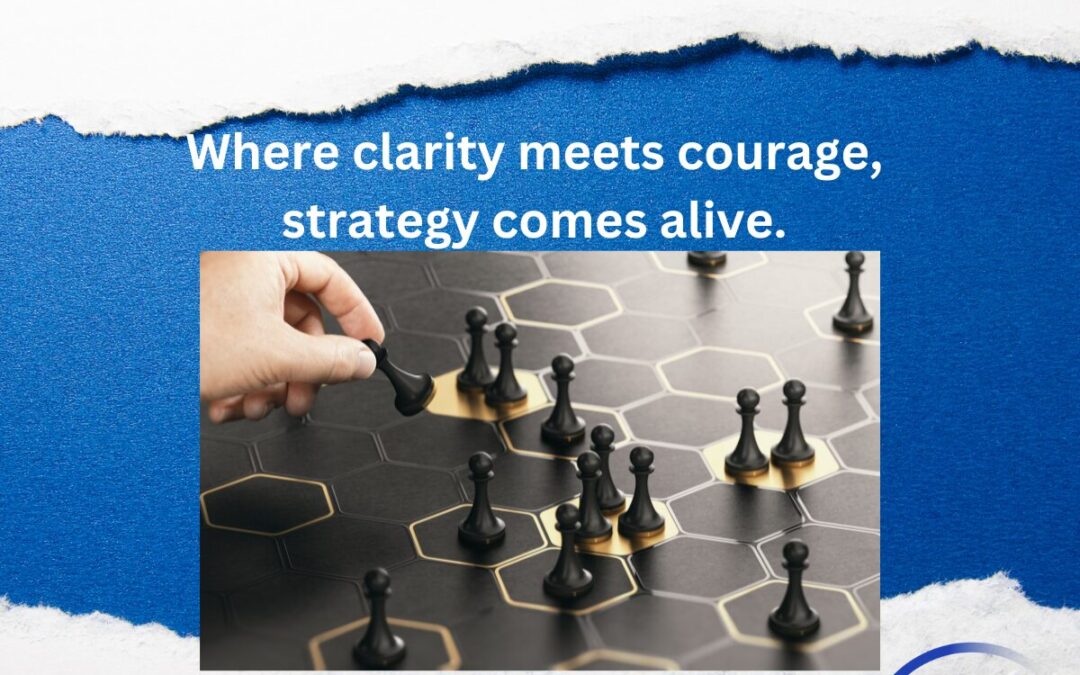
Just a few days ago I posted something to LinkedIn on strategy. Someone commented asking if I thought that there were fundamental concepts that all leaders share. Yes! Strategy isn’t just a corporate buzzword, or something scribbled on a whiteboard at the annual retreat. It is the actual foundation of decision-making, the quiet force that guides where energy, resources, and human resource flow. While every organization has its own unique challenges, there are universal truths about strategy that leaders across industries and levels wrestle with. These foundational principles often separate teams that spin their wheels from those that actually move the needle forward.
Clarity Before Action
Too often, organizations confuse activity with progress. Projects pile up, teams scramble, and leaders celebrate being ‘busy’ but without clarity, all of that energy seeps like water through open fingers. A clear strategy forces the uncomfortable but critical questions: What are we aiming for? What trade-offs are we willing to make? And most importantly, how does each initiative tie back to that vision? When leaders provide clarity, they don’t just set direction, they create alignment, allowing people to prioritize with confidence. Without it, even the most well-intentioned work becomes noise. Clarity isn’t a one-time announcement; it’s a constant reinforcement that shapes how decisions get made every single day.
The Discipline of Trade-Offs
Saying yes feels good. It keeps people happy, it avoids conflict, and it creates the illusion of moving forward. But the strength of strategy lies in the no’s. Every resource spent on one thing means less spent elsewhere. Leaders who lack the discipline to make trade-offs end up spreading their teams too thin, leaving them fatigued and unfocused. Trade-offs are uncomfortable because they close doors, but they also sharpen focus. They force organizations to double down on what matters most. A strong strategy isn’t about doing everything! It’s about having the courage to do fewer things with greater excellence.
Alignment Beats Ambition
A brilliant plan written in a deliverable or quarterly plan is worthless if the team doesn’t buy into it. Alignment is where strategy becomes real. It’s when every person understands not only what the goal is but also how their role contributes to it. This doesn’t happen with a single town hall meeting or an inspirational Monday morning speech. Alignment takes relentless communication, reinforcement in one-on-ones, and tying daily decisions back to the bigger picture. When employees see their footprints on the strategy, they don’t just comply, they commit wholeheartedly. Ambition can spark a vision, but alignment is what carries into momentum.
Flexibility Without Chaos
One of the most misunderstood parts of strategy is its relationship with change. A good strategy isn’t a rigid script, it’s a living, breathing framework. Leaders need to hold the vision steady while allowing tactics to take root. Too rigid, and the organization becomes brittle, unable to adapt when conditions shift. Too loose, and the team loses faith, seeing every pivot as a sign of uncertainty. The sweet spot is in consistency of direction paired with agility in execution. This balance reassures teams that, yes, adjustments will come, but they are purposeful, not reactionary. It’s the difference between being behind the eight ball and being proactive.
Culture as the Hidden Multiplier
Culture is where strategy either takes flight or quietly dies. A culture that rewards firefighting over planning will always undermine long-term goals. A culture that avoids accountability will erode even the best intentions. Leaders who treat culture as an afterthought quickly discover that it’s the invisible hand shaping results. Culture is a multiplier, meaning it either accelerates execution or corrodes it. Building a culture that prizes trust, ownership, and curiosity creates the conditions where strategy in departments thrives, not as a document, but as learned behavior. Ignore culture, and you’re left wondering why good strategies never seem to stick.
The Courage to Pause
Leaders often push relentlessly forward, believing hard work equals success. But sometimes the most strategic act is stopping. Pausing allows space for reflection, for asking: Is this still the right direction? Have conditions changed? Are we doing this because it works or just because we started it? Pauses prevent organizations from pushing faster toward the wrong destination. They give breathing room to reassess priorities and re-center on what matters. It takes courage to stop mid-motion, but it’s in those pauses that course corrections and breakthroughs are made.
Beyond the Leader’s Ego
The most overlooked danger in strategy is ego. When a leader makes the plan about their own recognition, validation, or legacy, decision-making becomes skewed. Teams sense it immediately, and trust erodes. True strategy demands humility. It’s not about who gets credit, but about what moves the whole forward. Leaders who strip ego out of strategy create space for the best ideas to surface often from unexpected places. When strategy becomes a collective roadmap rather than a personal statement, it gains staying power and authenticity. That’s when organizations stop chasing one person’s vision and start building something sustainable.
Strategy isn’t about long documents or brand slogans; it’s about the choices leaders make every day that ripple outward. The foundations, clarity, trade-offs, alignment, flexibility, culture, reflection, and humility are the common ground every leader stands on, whether they acknowledge it or not. The difference lies in who embraces them consistently and who avoids the harder work. Strategy doesn’t just tell people where to go it shows them why it matters.
Are you a leader with some great go-to strategies that you believe are foundational concepts that everyone could use? If so, please comment below and let’s keep the conversation going. As always, I appreciate your reading! Please like or share this article with anyone you think might be interested in reading it.
#StrategicLeadership #BusinessDecisions#LeadershipCulture #FocusAndClarity