
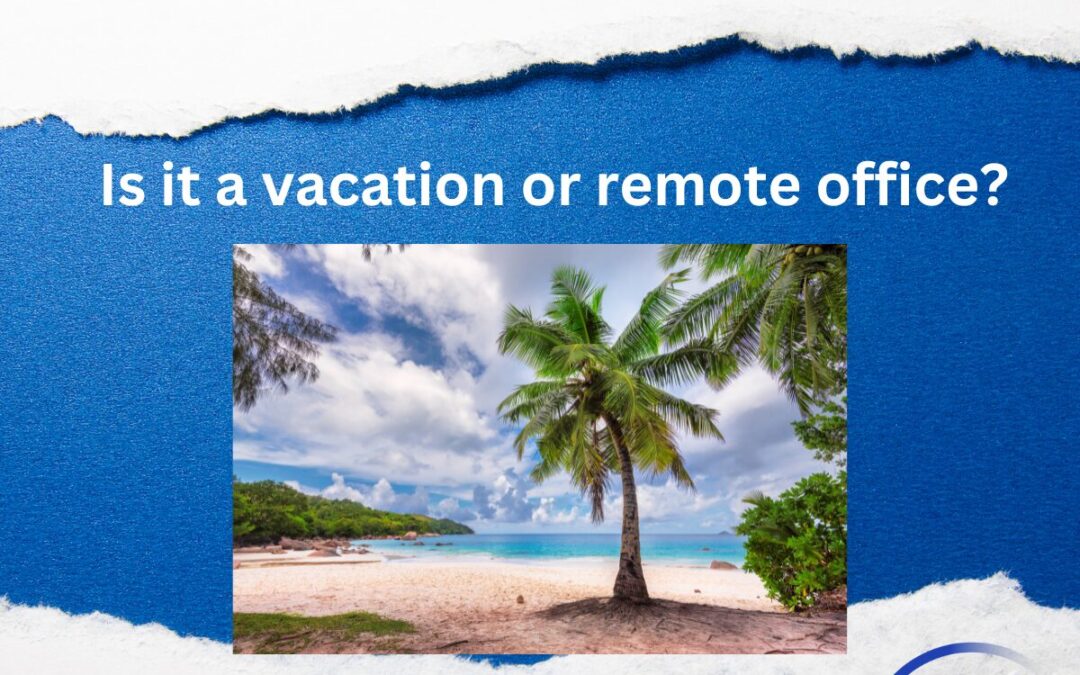
I need a vacation. It seems like lately I am always saying that! So I finally got one. Not just a quick trip back home to see family, where my itinerary was jam packed with functions. Or not just the quick weekend getaway, where packing and hopping on a plane takes up more time than the actual relaxing does. I actually just got back from spending 5 days on a glorious Caribbean island with beautiful weather, sand, and the sea. And I completely checked out. No travel pass on my iPhone, meaning cellular was turned off, and I only occasionally checked my text messages when I was on WIFI in the hotel. No emails. No computer. No calls. No work! To be honest, I can’t remember the last time I did this or felt so refreshed or recharged when I came back home. So, when is the last time you really took the time to unplug, and I am not just talking about doing this over a weekend?
Time Off Isn’t Just a Reward
Most people treat vacation like a luxury or an earned escape. It’s neither. Time away is actually a stress test for your leadership, your systems, and your culture. Can your team or workplace operate without you? Or do you spend your ‘vacation’ writing emails or Teams messages from a beach chair while pretending you’re relaxed? If everything collapses the minute you silence your phone, that’s not loyalty to your organization, that can be a sign of weakness and having no boundaries, disguised as importance.
Real commitment to your company and leadership isn’t about being endlessly available, it’s about building a team and infrastructure that doesn’t crumble when you’re not in the room. You don’t prove your value by being the only one who knows everything or being on and instantly available at all times. Trust me, I know this pace like the back of my hand! People can prove their value by creating a team or processes that can run without them.
Why People Don’t Fully Disconnect
Let’s be honest, most of us don’t go offline because we don’t want to be missed, we’re afraid we won’t be. If your identity is rooted in being needed, silence feels like irrelevance. If your worth is tied to constant busyness, rest feels like laziness. And if your confidence comes from control, letting go feels like danger.
This is where things start to unravel and burnout hides. Not in exhaustion, but in the belief that you can’t stop. That if you don’t answer emails at 10 p.m., things will fall apart. The truth? Individuals or teams don’t grow under constant supervision; they grow in space. Innovation rarely shows up when you’re available 24/7, in my opinion it arrives when you finally step away.
Preparation Is the New Vacation
The difference between a peaceful vacation and a chaotic one happens before you leave. Most people plan the flights, but not the systems. If you want to unplug fully, you need to prepare yourself and your team to function without constant approval. That means delegating decisions before they’re urgent, documenting what only lives in your brain, and clearly defining who owns what when you’re gone. If you are a solo entrepreneur with a business run from home, that means letting your customers or your virtual assistant know how long you will be gone and when you will be back!
This isn’t about micromanaging from afar, it’s about giving authority to the right people, not just responsibility. When your team knows what success looks like while you’re out, they stop guessing. Problems get solved faster, fewer emergencies become ‘urgent,’ and you return to progress, not a pile of fires waiting for you to put out.
Silence Is a Strategy, Not a Disappearance
Going device-free shouldn’t feel like abandonment. It should feel intentional. Set expectations early, not the night before you fly out. “I am not available. I won’t have Internet. I am checking my emails only when I return.” Tell your team or customers when you’re off-grid, who’s in charge, and how decisions will be handled without you. You aren’t vanishing, you’re exiting with clarity.
Silence is powerful. It tells your team, “I trust you.” It also reveals what’s broken. If people panic because you’re offline, it’s not because they can’t survive without you, it’s because you’ve accidentally built a culture where you, and only you, are the strategy. That’s not leadership or teamwork; that’s dependency dressed as commitment.
Your Team Needs Permission Too
If you never take a real break, your team won’t either. You can post all the self-care quotes you want (we all know who those people are) but culture isn’t built on advice, it’s built on what people watch you do. If you work through every vacation, your high performers will too. They’ll match your burnout, not your words.
The leader who says “take some time off” but answers emails from a cruise ship sends one message: rest is performative, productivity is the real currency here. The leader or team leader who fully unplugs says something different: you’re allowed to be a human, not a machine. That changes everything! When people are allowed to restore and fully rest, they often come back at their peak performance.
Coming Back Shouldn’t Feel Like Punishment
You shouldn’t need a vacation after your vacation. If coming back means 2,000 emails, 37 meetings, and a three-day anxiety attack to try to catch up, the problem isn’t time away. It’s how you or your organization operates every day. Reentry to work shouldn’t feel like penalty! It should feel like possibility, new ideas, bigger perspective, fresh focus.
Individuals who truly disconnect come back differently. Calmer. Sharper. More creative. I am speaking personally from this last experience. And coworkers and teams’ feels it. Not because you brought home souvenirs (I didn’t) but because you aren’t rushing, reactive, or resentful. You’re present again. That’s the point.
Vacation shouldn’t be a reward or privilege, it’s a requirement! It’s boundaries and leadership in practice. Not because you are selfish, but because life, work, and the people around you kept moving forward, even without you holding it all together.
Success isn’t about being everywhere, doing everything, or staying constantly busy. It’s about what remains steady, healthy, and intact when you step away, whether that’s your team, your family, your business, or simply your own peace of mind.
I’d love to hear from you. When is the last time you really took some time away, device free? Be honest! Have you ever come back to work from time off feeling totally rested and raring to go? Drop your thoughts in the comments below. Please like or share this article with anyone you think might need to read it! As always, I appreciate you reading.
#WorkLife #MentalWellbeing #BalanceOverBurnout #LiveIntentionally