
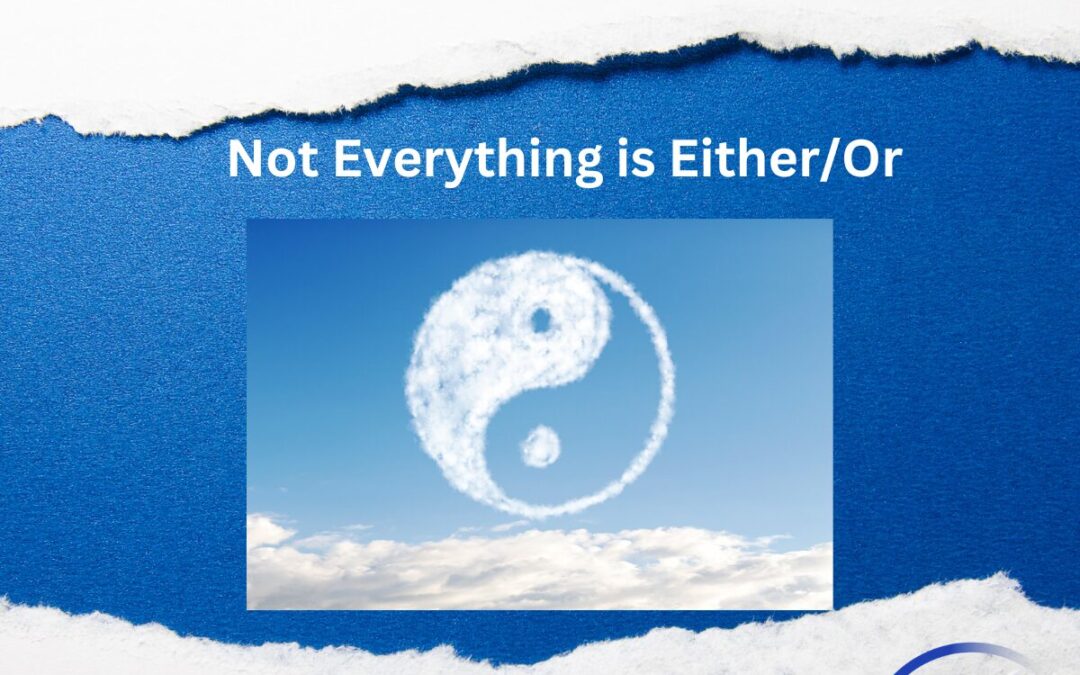
There are two experiences most people encounter at some point in their careers, even if they don’t have language for them.
One is being pushed into something that doesn’t work. A role that stretches too far, too fast. A project with unclear direction. Expectations that were never fully aligned. You try, you adjust, and eventually something breaks down. A feeling like things are not going to turn out well; that you have failed before you even start!
The other is just the opposite. Everything is framed positively. Wins are emphasized. Challenges are swept under the rug. There’s a constant push to stay upbeat, to focus on what’s working, to keep things moving without concentrating too long on what’s not.
On the surface, one feels uncomfortable and the other feels supportive. But neither, on its own, leads to real growth. What matters most is how we handle each of them.
Pressure
Forced failure often shows up as pressure without structure. You’re asked to deliver, but the path isn’t clear. You’re expected to succeed, but the variables are constantly shifting. Communication isn’t there from leaders. You are left to your own devices. Who can resonate with this? I bet if you took some time to think about it, most projects or deliverables can feel like this.
In those moments, learning happens, but not always in the way people expect. Instead of developing skills, you often develop coping strategies. You learn how to manage ambiguity, how to recover, how to keep going when things aren’t working.
That kind of learning is valuable, but it can also be incomplete. Without reflection or support, forced failure teaches resilience without direction. You become stronger, but not necessarily clearer. It’s important to note that if there is a lesson to be learned, good leaders will clear up any misdirection after the fact to help you understand what went wrong and what could be improved upon next time.
Positivity
Forced joy looks very different, and it comes with its own set of limitations. It shows up in environments where everything is framed as progress, even when it isn’t. Where feedback is softened to the point of being unclear or blowing smoke up the teams a*%! Any discomfort is quickly redirected into optimism. Some people even call this toxic positivity.
At first, this feels encouraging. But over time, it creates distance from reality. If everything is positioned as a win, it becomes harder to identify what actually needs to change.
All learning requires contrast. It requires seeing what worked and what didn’t without filtering everything through a positive lens.
Avoidance
What these two experiences share is avoidance, just in different forms. Forced failure avoids clarity. Forced joy avoids discomfort. In one case, you’re left to figure things out without enough guidance. With the other, you’re shielded from the parts of the experience that would create real insight and valuable feedback.
Both of these can stall development. Not because there’s nothing to learn, but because the learning isn’t being named or processed in a useful way.
Reality
The most effective environments don’t lean too heavily in either direction. They allow for honest outcomes. When something doesn’t work, it’s acknowledged directly. When something does work, it’s recognized without exaggeration.
This balance creates something much more valuable than either pressure or positivity alone. It creates clarity, and clarity is what allows professionals to improve with intention rather than reaction.
Ownership
Real growth happens is in ownership. Not just knowing the results, but of understanding.
When you can look at a situation, whether it felt like failure or success, and ask, “What actually happened here?” “What did I contribute?” “ What would I do differently?” you move beyond the experience itself. You’re no longer relying on the environment to define what you learned. You’re defining it for yourself and applying it to the next situation on a personal level.
Leadership
Learning or not learning has direct implications for leadership. Leaders who rely too heavily on pressure may believe they are building resilience, but they risk creating confusion. Leaders who lean too heavily on positivity may believe they are protecting morale, but they risk limiting growth.
The leaders who make the biggest impact are the ones who can hold both. They create space for challenge without abandoning support. They allow success to be recognized without overstating it. They tell the truth about what’s happening, even when it’s uncomfortable.
Where the Real Learning Happens
So which one teaches you more, forced failure or forced joy? On their own, neither is enough.
Failure without clarity teaches survival. Positivity without honesty teaches illusion.
Real growth comes from something much simpler and much harder to maintain. Seeing things as they are. Because in life, it’s not the experience itself that shapes you most. It’s how clearly you’re able to understand it.
I want to hear from you. Is a failure that is forced better than faking it until you make it, with positivity? Please like, comment, or share this article with anyone you think might like it. As always, I appreciate you reading!
#Leadership #ProfessionalGrowth #SelfAwareness #WorkplaceCulture