
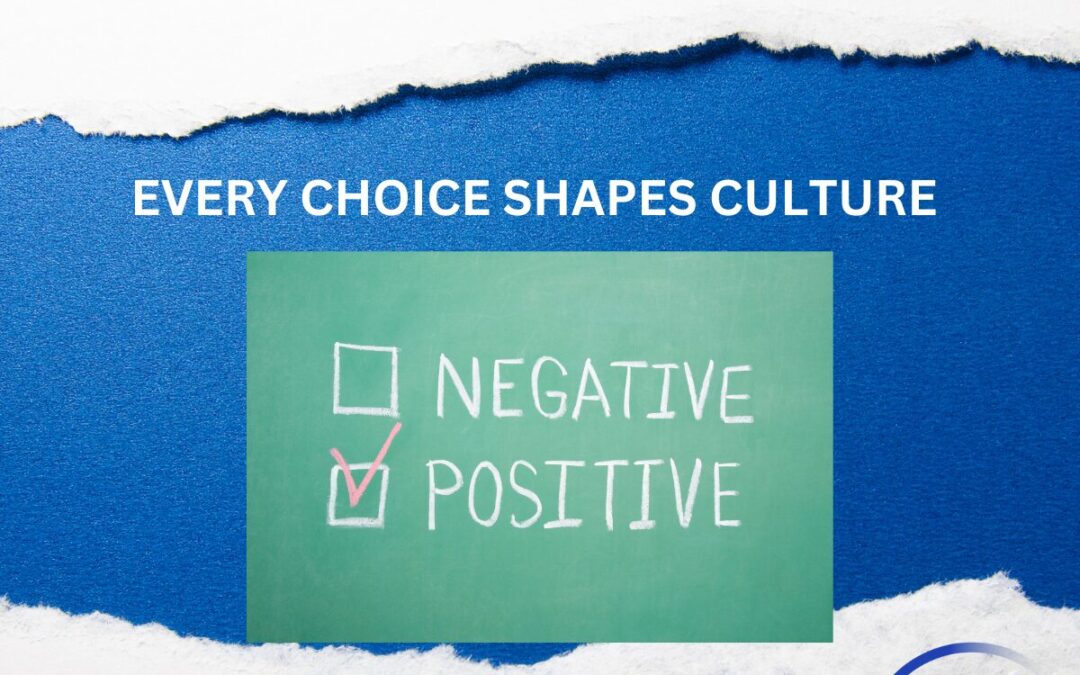
Choices. Yes, as leaders, we get to choose how we show up not only ourselves, but for others! Believe me when I tell you, whether you have a positive attitude or negative, both can be, and many times are contagious with the people around us. I want to delve into how we can set the tone, 9-5, M-F within our organizations.
Leaders Shape the Climate
Culture works like the climate in an office; you can feel it the moment you walk in. Leaders act like the thermostat systems that control it. If they’re volatile, storms follow, employees get irritated and cranky. If they’re steady, the atmosphere is calm, cool, and collected. Employees don’t need a values statement on the wall to know what matters; they read the tone in how leaders respond under pressure. Do they escalate conflict or cool it down? Do they blame or problem-solve? Leaders who treat every interaction as culture-shaping create a steady state environment that employees can trust. Attitude is everything! Leave the drama at the door before you take one step into work.
Shift From Problem-Finding to Problem-Solving
A culture of constant diagnosis without direction is exhausting. Meetings filled with and focused on ‘what’s wrong’ paralyze progress. Leaders who flip the question from what’s broken to what’s possible transform how teams approach challenges. By expecting employees to arrive with at least one proposed solution to a difficult situation, it shows others that leaders are reinforcing a collective responsibility to solve problems. Over time, this approach helps employees stop outsourcing their frustrations upward and start owning the outcome. This cultural shift from passive critique to active creativity is the real difference between a reactive workplace and a resilient one.
Drama Is a Hidden Tax on Performance
Every organization pays a ‘drama tax.’ It shows up as whispered gossip, sarcastic Teams messages, or side meetings after the meeting. Left unchecked, it drains hours of focus and corrodes trust. A positive culture doesn’t ignore tension, it demands it be brought out into the open and addressed openly. When leaders consistently steer drama into direct dialogue, they cut out this hidden tax. Teams spend less time speculating and more time producing. What gets lost is the noise. What gets gained is clarity.
Consistency Builds Psychological Safety
Fairness is one of the most underestimated drivers of positive culture. Employees can live with tough standards if they know those standards apply equally. What breaks trust is when leaders bend rules for some and not for others. Leaders who are steady, those who give feedback the same way across the board, who recognize effort without bias, send a message: this is a safe place to work, communicate and contribute as a team. Safety doesn’t mean avoiding hard truths, it means knowing those truths won’t blindside you. Predictability is the foundation of loyalty.
Small Acts Matter
Grand gestures make headlines, but micro-moments make culture. The quick ‘thank you’ in a meeting, the leader who notices someone stayed late, the willingness to pause and ask, “How are you holding up?” These moments matter far beyond the effort it takes to say them. They say, you’re seen here, you are appreciated and what you do matters. The paradox is that leaders often underestimate how these small validations shape the daily experience of work. A steady stream of genuine acknowledgment turns a job into a place where people feel proud to contribute.
Culture Is Sustained by Daily Choices
Organizations often think of culture as a branding campaign, something to launch, rebrand, or scale. But culture isn’t set once, it’s practiced every day. It lives in the choices leaders make when they’re tired, stressed, or under scrutiny. Do they default to blame or rather curiosity and ask questions? Do they protect their ego or protect their team? The accumulation of those small decisions is what employees call ‘our work culture.’ Left on autopilot, culture erodes under pressure. But when leaders choose intentionality, culture becomes a competitive leadership advantage that endures long after a reorg, a merger, or a market shift.
What do you think about your work culture? Does this resonate with you? What else would you add? As always, I appreciate you reading. Please like, comment, or share this article with anyone you think might be interested in reading it. Let’s keep the conversation going with your thoughts!
#LeadershipDevelopment #WorkplaceCulture #ExecutiveCoaching #BusinessLeadership