
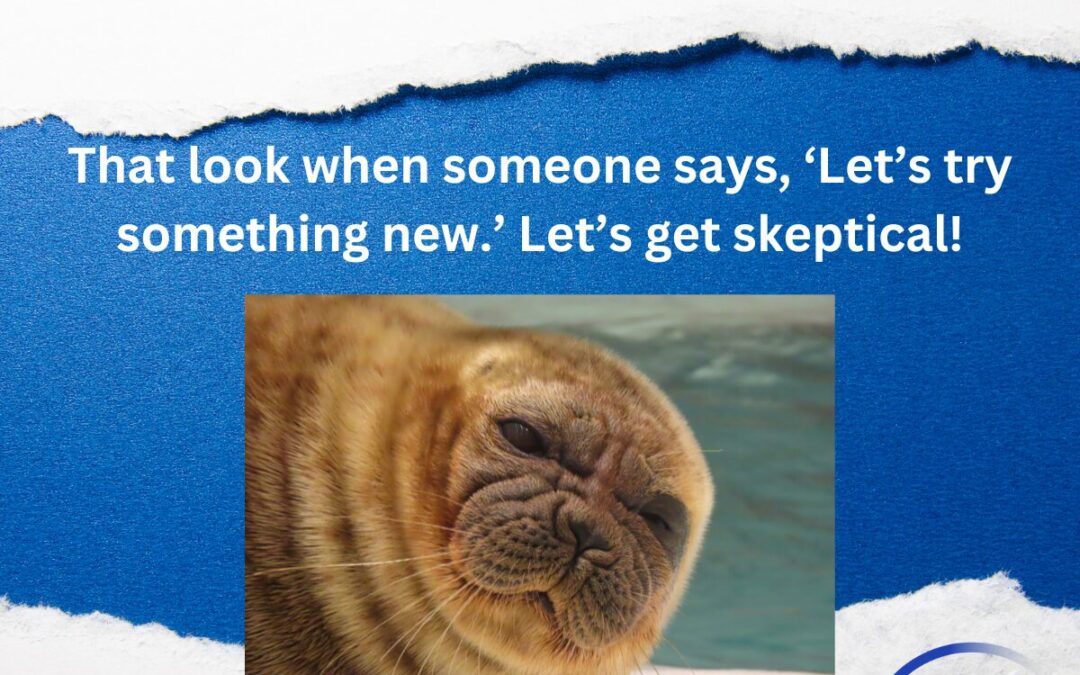
Every workplace has one, or rather, chances are, every team has one. The colleague who finds the cloud in every silver lining. The one who sighs during meetings, rolls their eyes at new ideas, or reminds everyone why ‘this won’t work.’ Back in the day, we called them Debbie Downers or Grumpy Guses. No offense to those who carry those first names and are actually pleasant co-workers! Whether you call them the skeptic, the contrarian, or the chronic complainer, these individuals can drain energy from even the most motivated teams. Believe me, I know this firsthand!
Do you recognize any of these in your office? Or do you recognize yourself and how you are showing up for your team meetings?
The Office Skeptic Lineup
- The Quiet Saboteur – They nod along in meetings, then slowly derail progress through small concerns and subtle delays.
- The Idea Deflator – No matter how innovative the plan, they’re ready with ‘We’ve tried that before. It won’t work.’
- The Storm Cloud – Their mood sets the weather for the whole team and it’s always partly negative with a chance of drama.
- The Devil’s Advocate – Every conversation is a debate club audition, they argue for sport, not solutions.
- The Overthinker – They can’t move forward without dissecting every angle… twice.
- The Nostalgic Naysayer – They miss ‘the good old days’ when things were simpler, there was a different leader and resist anything that feels new.
- The Cynical Realist – They believe they’re just being ‘honest,’ but their version of reality leaves little room for hope.
- The Professional Eye Roller – Their body language speaks louder than their words and none of it says ‘team player.’
- The Meeting Hijacker – Turns every agenda item into a platform for personal grievances or alternate plans.
- The Burnout Whisperer – Once the office cheerleader, now so drained that enthusiasm feels suspicious.
- The Data Defender – Refuses to budge without ‘hard evidence,’ even when the team needs a leap of faith.
- The Hidden Hero – Comes across as grumpy but secretly cares deeply if you can look past the sarcasm.
But here’s the truth, under all that resistance and skepticism often lies something valuable, whether it be information, fear, or unmet needs. When handled thoughtfully, even the most disagreeable person can become a surprising catalyst for growth. Let’s take a closer look at what might be going on here.
The Root of Resistance
Most negative behavior stems from something deeper than attitude, many times it comes from a place of uncertainty, fatigue, or a lack of trust. People who resist change or challenge ideas are often the ones who feel unheard or undervalued. Their pushback isn’t always about the issue on the table, it’s often about control, identity, or belonging.
As leaders, it’s easy to label difficult employees as ‘toxic,’ but doing so can blind us to the underlying cause. Instead, start with curiosity. Ask yourself and them: What’s really driving this reaction? Maybe they’ve seen initiatives fail before. Maybe they’re afraid of being left behind. Or maybe they simply don’t feel like their expertise matters anymore.
When you get curious instead of defensive, you shift from reacting to understanding and that’s when change begins. I’ve said it before, and I’ll say it again, getting into the coaching, questioning mindset.
When Negativity Becomes Contagious
Energy spreads fast in the workplace. A single cynic can shift an entire team’s mood. When one person consistently challenges progress or points out flaws, others often follow, not out of agreement, but avoidance. They’d rather stay quiet than become the next target of critique. Energy, whether positive or negative, can spread like wildfire.
This is why unchecked negativity isn’t just a personality issue; it’s a culture issue. Stop. Go back. Read that again. Done? Okay, so therefore, the key is containment, not confrontation. Address the behavior early, privately, and respectfully. A simple “I’ve noticed you’ve been frustrated lately, want to talk about it?” can be disarming. They won’t expect it. You’re not attacking their character; you’re opening a door for them to open up and share what’s going on with them.
Remember no matter what your title, your tone sets the temperature. Stay calm, clear, and grounded. Negativity only grows when it’s met with defensiveness or more negativity volleyed back.
The Emotional Dump Loop
You’ve probably experienced this, a coworker who turns every check-in into a therapy session. They vent, you listen, and suddenly you’re carrying their emotional weight. These emotional dump loops can erode boundaries and morale, especially if they happen repeatedly. The solution isn’t to shut empathy off, it’s to redirect it. You can say, “I hear that you’re frustrated. What do you think would make it better?” That one question can move the conversation from complaint to accountability.
Leaders aren’t therapists. You can care deeply without becoming someone’s emotional landfill. Healthy empathy is about listening with compassion, not absorbing the chaos.
The Quiet Sabotage
Not all negativity is loud. Often times it’s quiet. It could show up as missed deadlines, passive-aggressive emails, or the slow erosion of enthusiasm. Quiet sabotage is often harder to spot but can be just as damaging as the other forms of overt negativity. It shows up as disengagement disguised as compliance.
So what’s the antidote? Visibility and accountability. Check in often, not to micromanage, but to stay connected. Ask for input, recognize small wins, and be specific with feedback. Most importantly, tie every person’s role in the organization back to purpose. When people understand how their work connects to the bigger picture, it’s harder to undermine it.
Turning Disagreement Into Value
Disagreement, in itself, isn’t the enemy. In fact, some of the most innovative ideas come from tension and debate. The problem starts when disagreement becomes dismissal. The goal is not to silence the skeptic, it’s to channel their critical thinking constructively.
Invite dissent in a structured way. Ask questions like, “What risks do you see here?” or “What would make this idea stronger?” This reframes opposition as contribution. It’s amazing how quickly defensiveness fades when people feel their perspective matters.
The bottom line is that healthy teams don’t avoid conflict, they use it as fuel for better outcomes.
Leading Through Example
Leaders set the emotional tone of their teams. If you respond to negativity with irritation, you reinforce the behavior you’re trying to stop. But if you respond with clarity, empathy, and boundaries, you model what accountability looks like in real time.
This doesn’t mean tolerating toxic behavior indefinitely but is does mean handling it in a way that protects both the person and the culture. Because at the end of the day, leadership isn’t about perfection. It’s about presence. And presence means knowing when to listen, when to challenge, and when to let go.
Do you have one of the above office skeptic archetypes in your meetings? If so, which one and how are you circumventing there skepticism? I’d love to hear from you. Please like, share, or comment below and let’s keep the conversation going. If you know someone who might receive value from reading this please pass it along through your network and repost. As always, I appreciate you reading!
#LeadershipDevelopment #WorkplaceCulture #EmotionalIntelligence #PeopleStrategy