
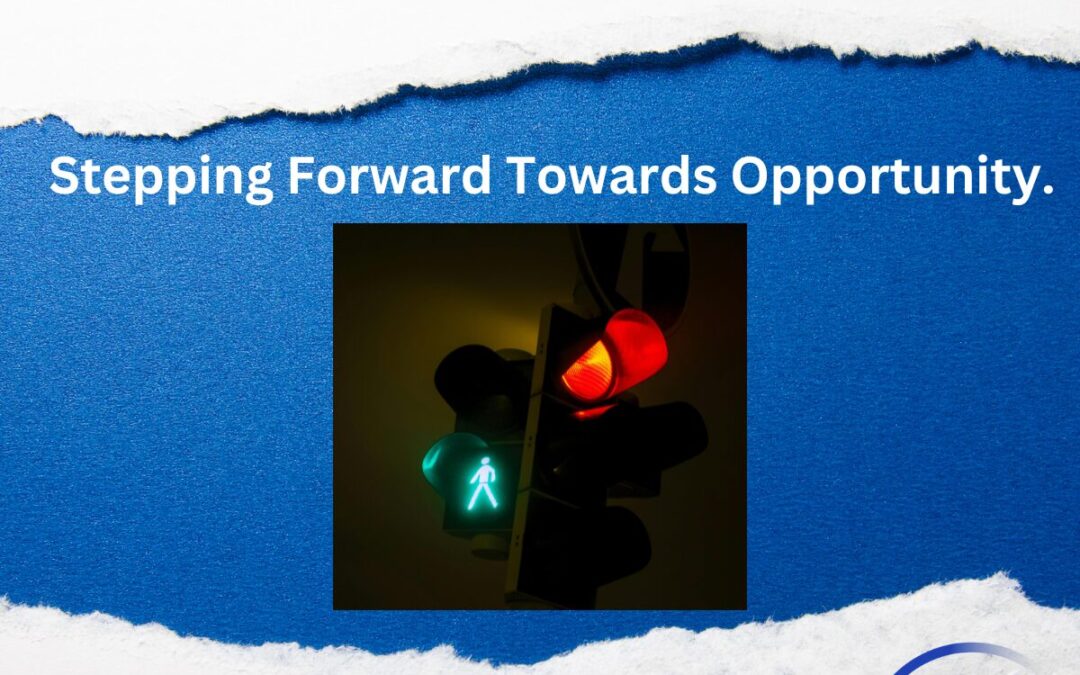
As I was walking with my daughter and a friend on a sunny day in San Diego, I noticed something. We were about to cross a street without a crosswalk, and the traffic was relentless. The thing I noticed was a simple moment most of us experience every day: standing at the edge of a street, deciding when to cross. Some people wait. They look for a clear break, no cars coming, no uncertainty. They only step forward when it feels completely safe.
Others step out into the street with intention. Not recklessly, but with presence. They make eye contact. They hold up their hand and make a bold move to step out in traffic to cross! They move in a way that signals commitment. And more often than not, the traffic responds. This was my 31-year-old tenacious daughter, she stopped four lanes of busy traffic!
That same pattern shows up in how we operate at work, especially when it comes to taking initiative, voicing ideas, or stepping into something new. This difference isn’t confidence alone. It’s how we relate to risk.
Hesitation
In workplace environments, waiting often looks responsible. The safer way to do things You gather more information. You observe dynamics. You wait for clarity, alignment, or explicit permission before moving forward. Some managers often applaud lower risk.
On the surface, this appears thoughtful. But over time, waiting can quietly become a default. You begin to rely on conditions being right before you act. Opportunities pass not because you aren’t capable, but because you were waiting for certainty that rarely comes. Waiting for the perfect opening can feel safe. It can also become limiting. And sometimes that perfect opportunity to cross the street never comes unless you step forward.
Assertion
Then there are professionals who move differently. They don’t ignore risk, but they engage with it. They step forward before everything is fully clear, trusting their ability to adjust as they go.
This isn’t about force or dominance. It’s about signaling intent. When you speak up early, propose ideas, or take ownership without being asked, you shift how others respond to you. People begin to see you as someone who creates movement, not just reacts to it. And just like stepping into traffic without a crosswalk, that presence often changes the behavior around you.
Perception
What’s interesting is how these two approaches are interpreted. Those who wait are often seen as careful, measured, and reliable. Those who step forward are seen as proactive, confident, and sometimes even reckless in their risk taking.
But perception isn’t always accurate. Many people who wait are capable of much more than they show. Many who step forward still experience uncertainty, they’ve just learned not to let it stop them. The real distinction isn’t fear versus confidence. It’s whether uncertainty delays action or coexists with it.
Risk
Risk in the workplace is rarely dramatic. It doesn’t usually involve major failures or visible consequences. It shows up in smaller, quieter ways, like sharing an idea that might not land, asking a question others are avoiding, or stepping into a role before you feel fully ready.
These are not high-stakes risks, but they are meaningful ones. They shape how you are seen, how opportunities find you, and how your career evolves over time. Avoiding these moments doesn’t protect you as much as it feels like it does. It simply keeps you in a narrower version of your potential.
Initiative
Initiative is often misunderstood as doing more. In reality, it’s about acting sooner. It’s the willingness to move before everything is fully formed, to contribute before you’re certain how it will be received. Adaptive versus reactive.
People who consistently take initiative don’t wait to be asked for input. They create space for their ideas by introducing them. They don’t wait for traffic to stop; they engage with what’s already moving. In doing so, they become part of shaping the direction rather than responding to it.
Responsibility
There’s a quiet responsibility that comes with stepping forward. When you initiate action, you also take on ownership for what follows. You don’t get to step back as easily. You’re now part of the outcome.
This is why many people hesitate. It’s not the action itself that feels risky; it’s the responsibility that comes with it. But that same responsibility is what builds credibility. It signals that you’re not just participating, you’re contributing in a meaningful way.
Timing
The goal isn’t to move without awareness. It’s to recognize when waiting is no longer adding value. There are moments when patience is necessary. But there are also moments when waiting becomes avoidance disguised as caution.
Knowing the difference is what separates thoughtful professionals from passive ones. Timing isn’t about perfection; it’s about recognizing when the moment is asking for you to step forward.
The Real Question
So the question isn’t whether you’re a risk-taker or risk-averse. It’s this: Are you waiting for the right moment or are you willing to help create it? Because in most professional environments, traffic rarely stops completely. But it often slows down for those who are willing to step forward with intention.
I want to hear from you. Do you wait for traffic before crossing the road or do you stop traffic? Do you think one is better than the other, especially in your place of work? Please like, comment, or share this article with someone you think might enjoy it. As always, I appreciate you reading.
#Leadership #ExecutivePresence #ProfessionalGrowth #Initiative