
Everyone has heard the saying that you are the sum of the 5 people you spend the most time with. But like me, many professionals spend years curating their resumes and careers, but very little time thinking about something just as influential, who are they spending time with at work. Not authority in meetings. Not access on a team. But proximity when they can.
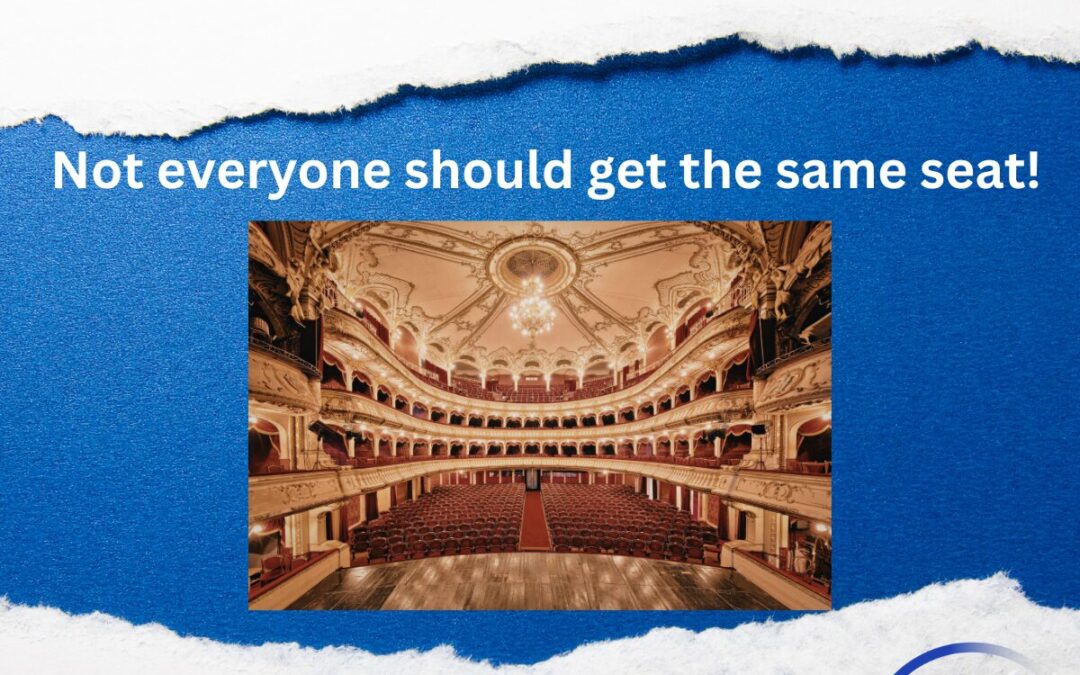
What I am about to share is not a new concept! Many theorists and business leaders have written about this, and in my research I am combining many of their thoughts below. Think of your workplace as a kind of theater. There’s limited space up front, a lot of general seating, and a balcony that feels far removed from the action but has a bird’s eye view. And whether we realize it or not, we assign people seats every day, based on trust, energy, respect, and impact.
The mistake isn’t having different seats in your theater. The mistake is pretending everyone deserves the same one.
Front Row
Your front row at work should be small by design. These are the colleagues, or dare I say ‘friends’, whose presence sharpens your thinking, steadies your confidence, and challenges you in ways that make you better. They don’t just agree with you, they engage and challenge you. They tell you the truth without posturing, and they don’t disappear when things get uncomfortable.
This is high-rent space. It should be reserved for people who respect your boundaries, honor your time, and show up with reciprocity. When someone occupies a front-row seat without earning it, through entitlement, drama, or one-sided selfishness, it doesn’t just drain energy. It distorts your judgment. Who sits closest to you shapes how you see yourself and your work.
General Admission
Most colleagues belong here, and that’s not a slight. General admission is functional, collaborative, and necessary. These are people you work well with, exchange information with, and rely on professionally, but not emotionally or strategically. In my almost 30 years of being an MBA Professor, this is what it was like. We came in, taught our classes, held office hours, ate lunch or dinner in the faculty dining room when we could, and then went home. The only time we were all together was when we were in a faculty meeting, and truth be told, many of those were not mandatory.
Problems arise when professionals expect general admission relationships to provide front-row support. Not every colleague needs access to your doubts, ambitions, or inner dialogue. When you overshare or overinvest here, frustration follows, not because others failed you, but because the seat assignment you gave them was misaligned.
The Balcony
This is the hardest seating choice to accept. The balcony is where you place colleagues you can still be civil with, courteous to, even wish well, but from a distance. These are people whose energy consistently pulls more than it gives, who require caretaking, or who quietly undermine momentum. It might be a negative team member or a person that wastes your time.
Respecting someone from the balcony isn’t cruelty. It’s clarity. Closeness amplifies influence, and not everyone should have equal access to yours. Distance can be a form of professionalism, not avoidance. The one caveat here is when you are avoiding someone that should be in a different section of your life.
Energy Economics
What most professionals underestimate is the cost of misplaced proximity. Every interaction draws from a finite reserve of attention, patience, and emotional energetic bandwidth. When too many draining dynamics sit too close, even high performers start making smaller decisions, taking fewer risks, and protecting themselves instead of expanding.
Intentional seating isn’t about hierarchy, it’s about sustainability. Your energy fuels your leadership. Protecting it isn’t selfish, it’s strategic. In my opinion, it is a resource. It takes time to get that energy back that was drained from us, and the way most of us work hard, it might be a non-renewable resource!
Re-Seating
I want to remind you that seats aren’t permanent. Careers evolve and we switch jobs. People change or retire. Someone who once belonged in your front row may no longer fit there. Don’t look at this like failure, it’s actually growth.
Take it from me, I just recently became the usher in my own work and personal life theater. Re-seating requires honesty. It may feel uncomfortable at first, especially for professionals conditioned to be accommodating. But clarity always outperforms resentment. When you consciously choose where people sit, your work life becomes lighter, cleaner, and far more effective.
I want to hear from you. The question to ask yourself isn’t, “Who do I like at work?” rather it’s, “Who actually helps me show up as my best professional self” ? Once you answer that, the seating becomes obvious. Please like, comment, or share this article with anyone you think might enjoy reading it. As always, I appreciate you reading!
#Leadership #ExecutivePresence #ProfessionalBoundaries #CareerGrowth